Don’t you hate it when you express something personal and the listener basically brushes it aside?
For example, you tell me “I’m worried about my job given the tough economy right now” and I reply with “Oh, you shouldn’t feel that way”, “God will always provide”, or “With your credentials? You’ll get a new job in no time!”
So why do we keep responding with rah-rah mini-sermons? Because we mean well. We want to help. We want the bad feelings to go away. (If we are honest with ourselves, we may also be uncomfortable with the other person’s bad feelings.)
However…
I don’t know about you, but I would feel:
* Gaslighted
* Frustrated
* Neither heard nor understood
* Never to open up anymore
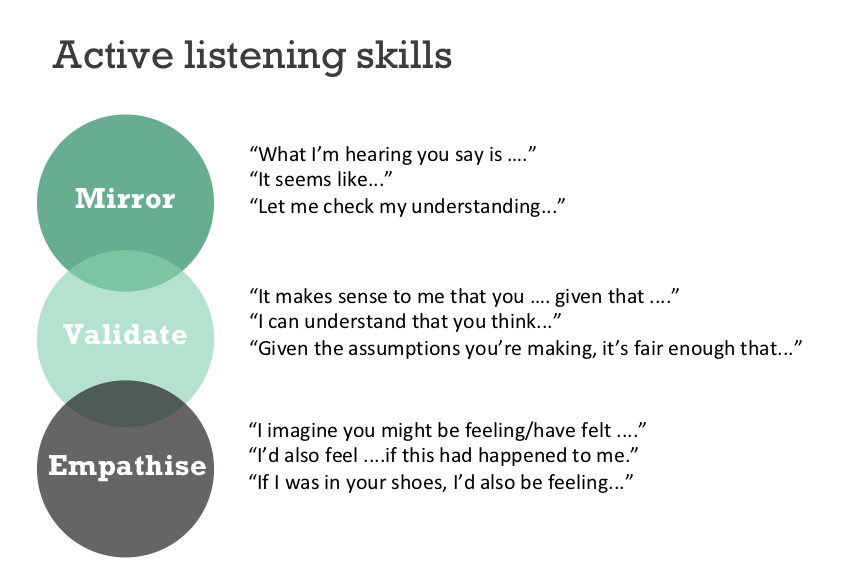
Coaches are to respond differently. We are trained to reflect and empathize. But Executive Coach Sarah Rozenthuler, in her must-read book Now We’re Talking, called for a middle step: validating. I like her definition, you acknowledge that the client’s statement makes sense, even if you don’t agree with it.
Here’s how it works. Basically, all of us say or do things out of a good reason. It may not be a good reason for you, but it is a good reason for me. Think again why we tend to respond with lecturing: we want to help. Our intent is good although the impact is different.
In fact, have you noticed a trend in movies where villains get humanized? Specifically, we are told of a bad guy’s motives such that while we don’t agree with his methods, he has a point. Thanos, anyone?
Thus, Rosenthuler’s model is Mirror -> Validate -> Empathize (see jpeg below) What we call reflect, she calls mirror. Same same.
In the worry-wart’s case, I may respond with:
“It sounds like you’re really worried about your job security right now [mirror].
“Given the way the economy is now, I can understand where that worry is coming from [validate].
“I can only imagine how heavy and stressful that worry must feel, carrying it with you day to day [empathize].”
Validation means you do not judge or fix the client. What’s more, it builds trust and can go a long way to defuse conflict.
So the next time someone bares his or her soul to you, don’t be quick with that lecture. Mirror, validate and empathize. It may be the lubricant you need for today’s conversations.
January 9, 2026
0 Comments